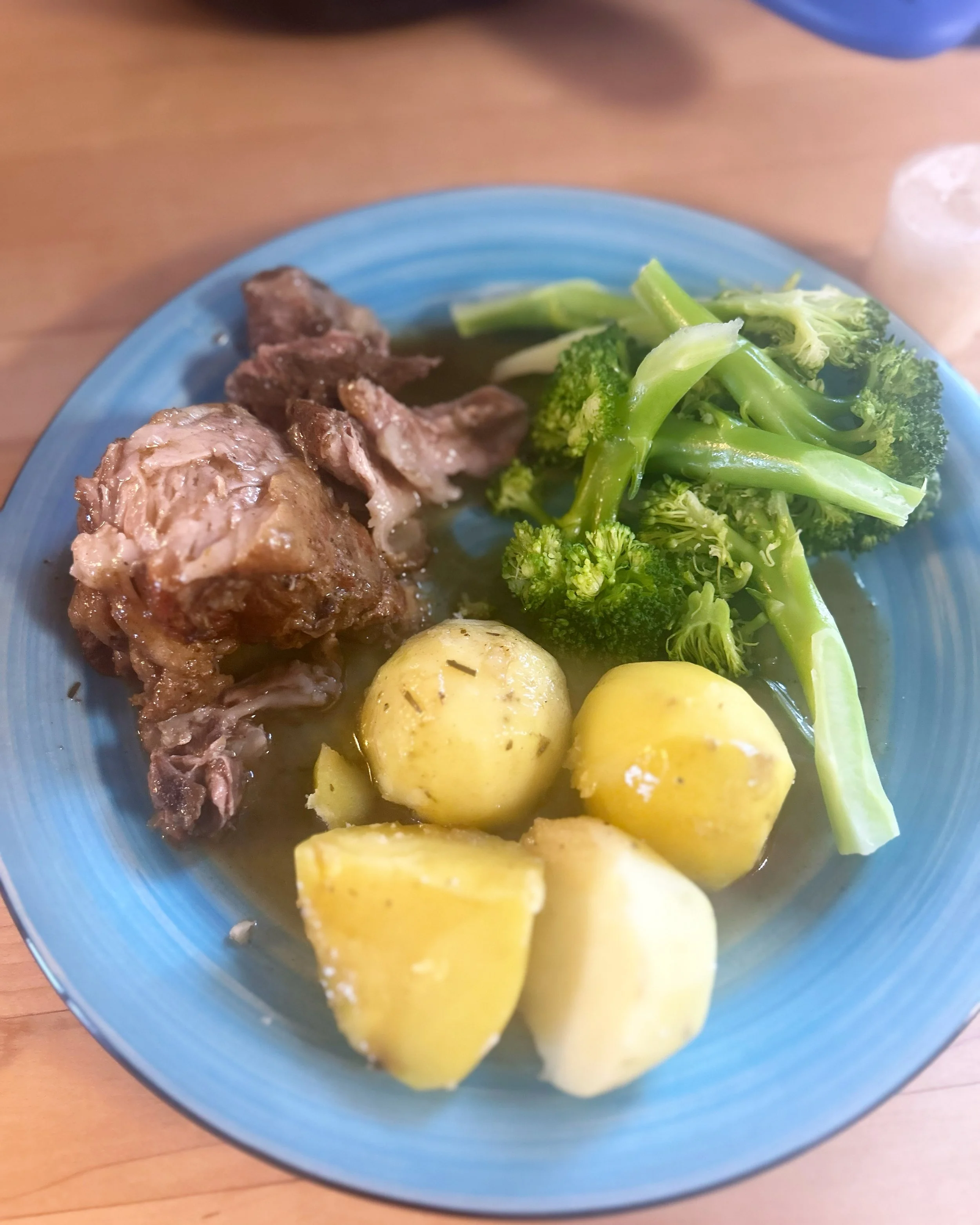
Cooking with pork hocks
I have never actually cooked fresh pork hocks before. In the past, typically we have smoked ours and I make split pea soup (which is an excellent use of hocks). This year, as I was sorting through our remaining pork inventory, I pulled a pack out and decided to give them a go. I remember growing up, my mom would cook them occassiossonaly, always in a slow cooker with saurekraut (also an excellent way to use them). But I wanted to try something different.
Browsing recipes on-line, it seems to be a common fare in german cuisine, hence the popular pairing with saurekraut I guess. There was a german recipe for “Schweinshaxe” in which you simmer the hocks in a brine with juniper berries, peppercorns, onion, and caraway seeds and then roast in the oven to crisp up the skin on the outside into delicious crackling - but alas, our pork hocks are skinless! I’ll have to ask our butcher for mine left with skin on next year and give it a go.
Pork hocks are a tougher cut, and thus all recipes require slow and low cooking to make the meat meltingly tender and fall of the bone. I settled on a braised hock recipe from Food and Wine website (Braised Pork Shank Recipe (foodandwine.com). I made some adjustments of my own and am sharing the process below. As a low-cost option, the hocks made a delicious supper that if you are interested, I would recommend trying.
Ingredients:
1/4 cup flour 2 medium carrots
1 tbsp chile powder 4 garlic cloves
1 tbsp salt 1/3 cup dry white wine
1 tbsp gr. pepper 2-4 cups pork broth (or chicken broth)
3 lbs pork hocks 1 tbsp dried rosemary
2 tbsp lard (or preferred cooking oil) 1/2 tbsp dried thyme
1 medium onion 2 bay leaves
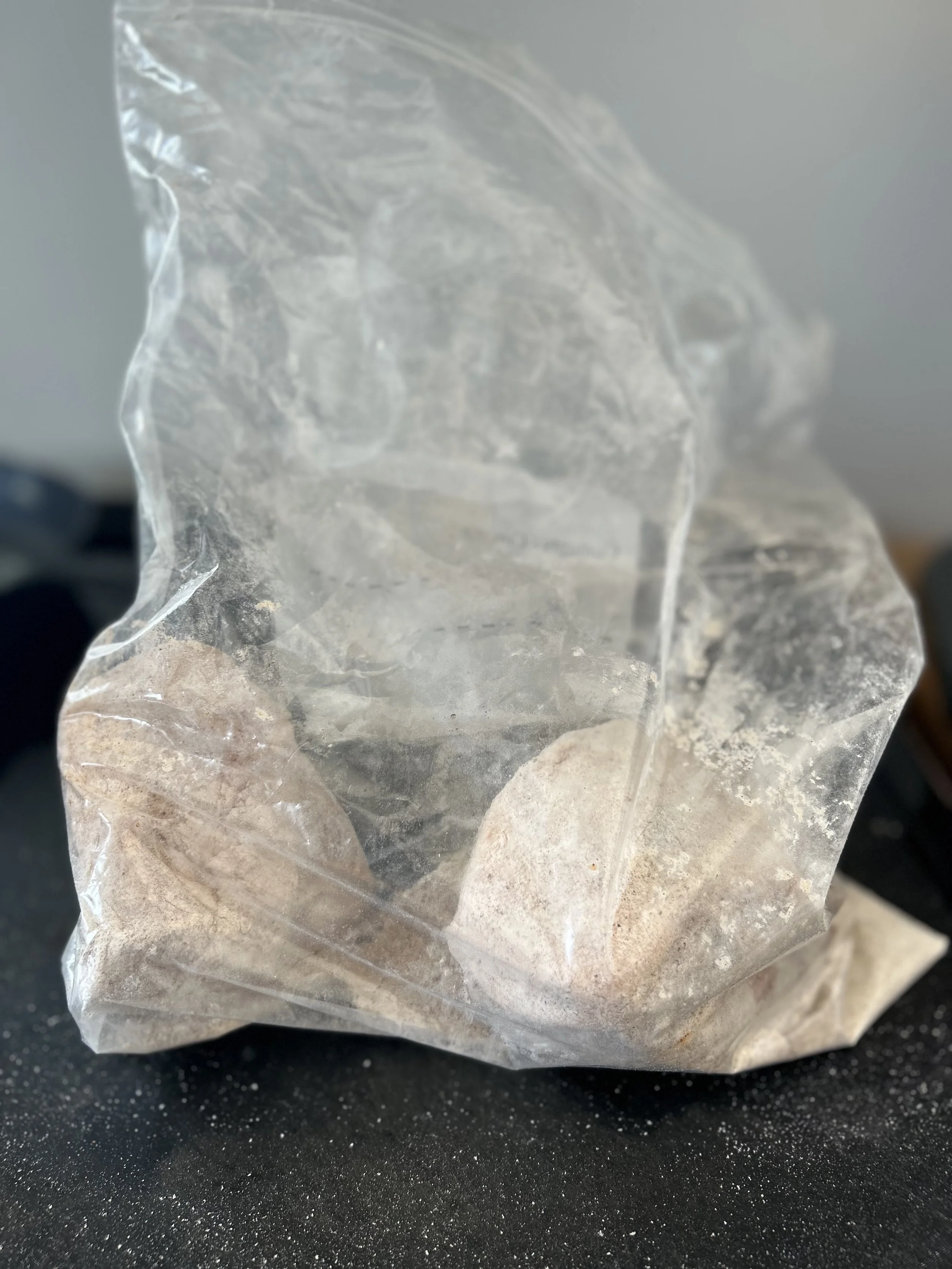
Step 1:
Combine flour, chile powder, salt, pepper in a large ziplock bag - mix to combine. Add hocks, close the bag and shake to coat hocks in the flour and spice mixture.
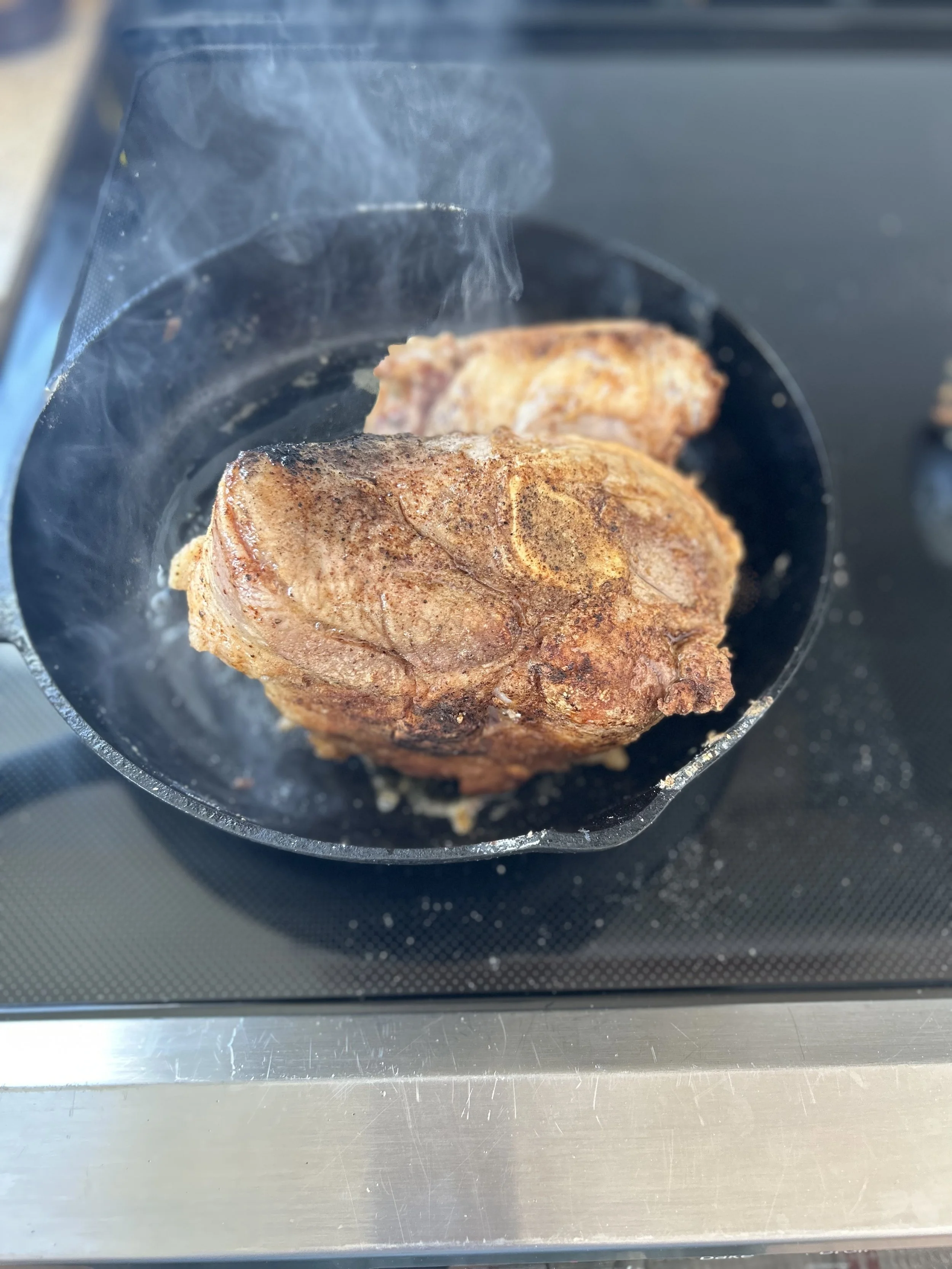
Step 2:
Heat lard (or cooking oil) in a pan over medium -high heat. Brown hocks on all sides, working in batches if necessary to no overcrowd the pan. Once browned, place hocks in a large pot that will hold all ingredients.
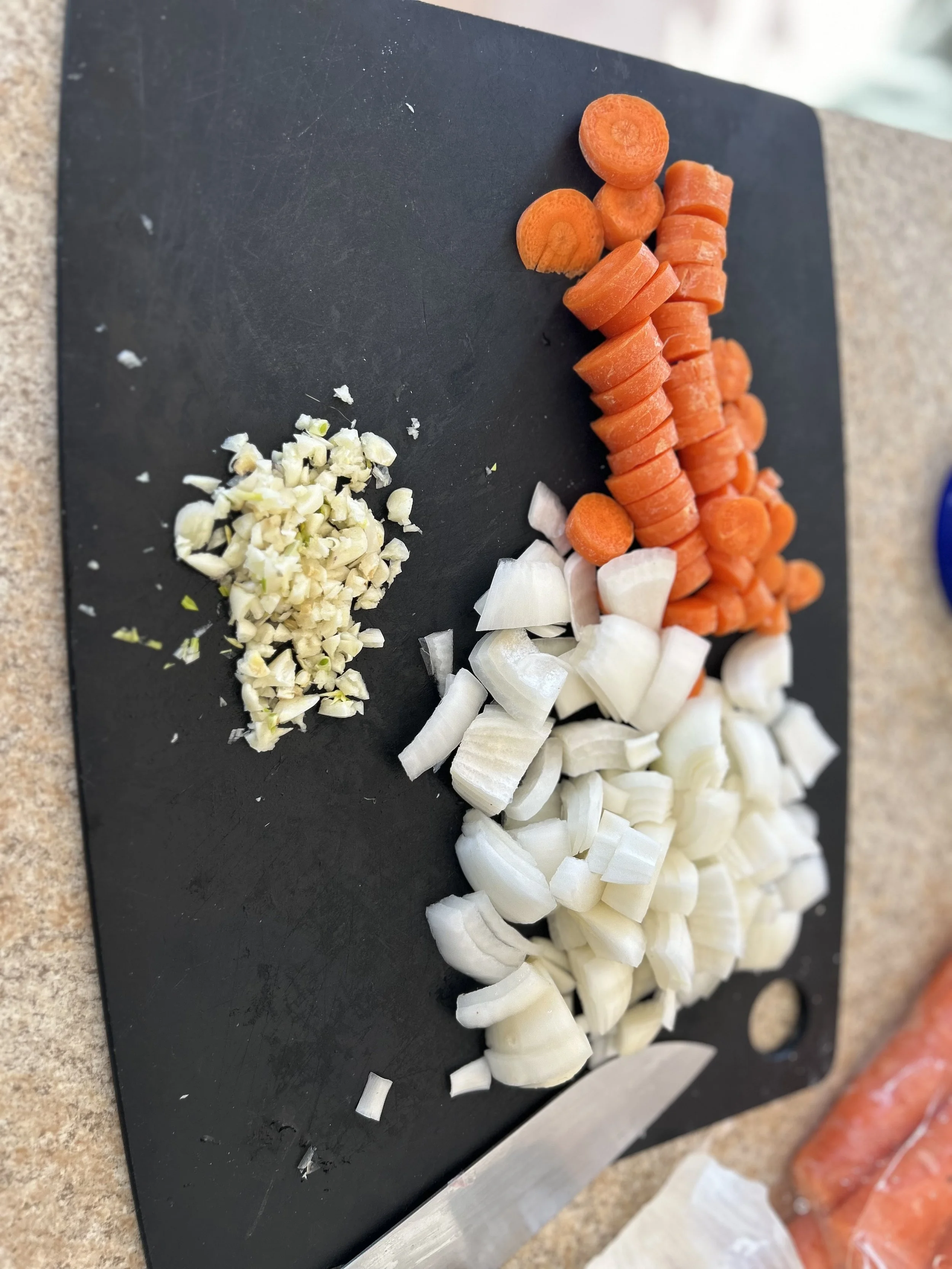
Step 3:
Chop onions, garlic and carrots (you could add celery as well, I was just out when I made this dish). Add more lard/oil to pan used to brown the hocks the pan, if necessary, and cook vegetables until starting to soften. Once vegetables begin to soften, add the wine to the pan, scraping up any browned bits from the pan. Allow the wine to come to a boil.
Step 4:
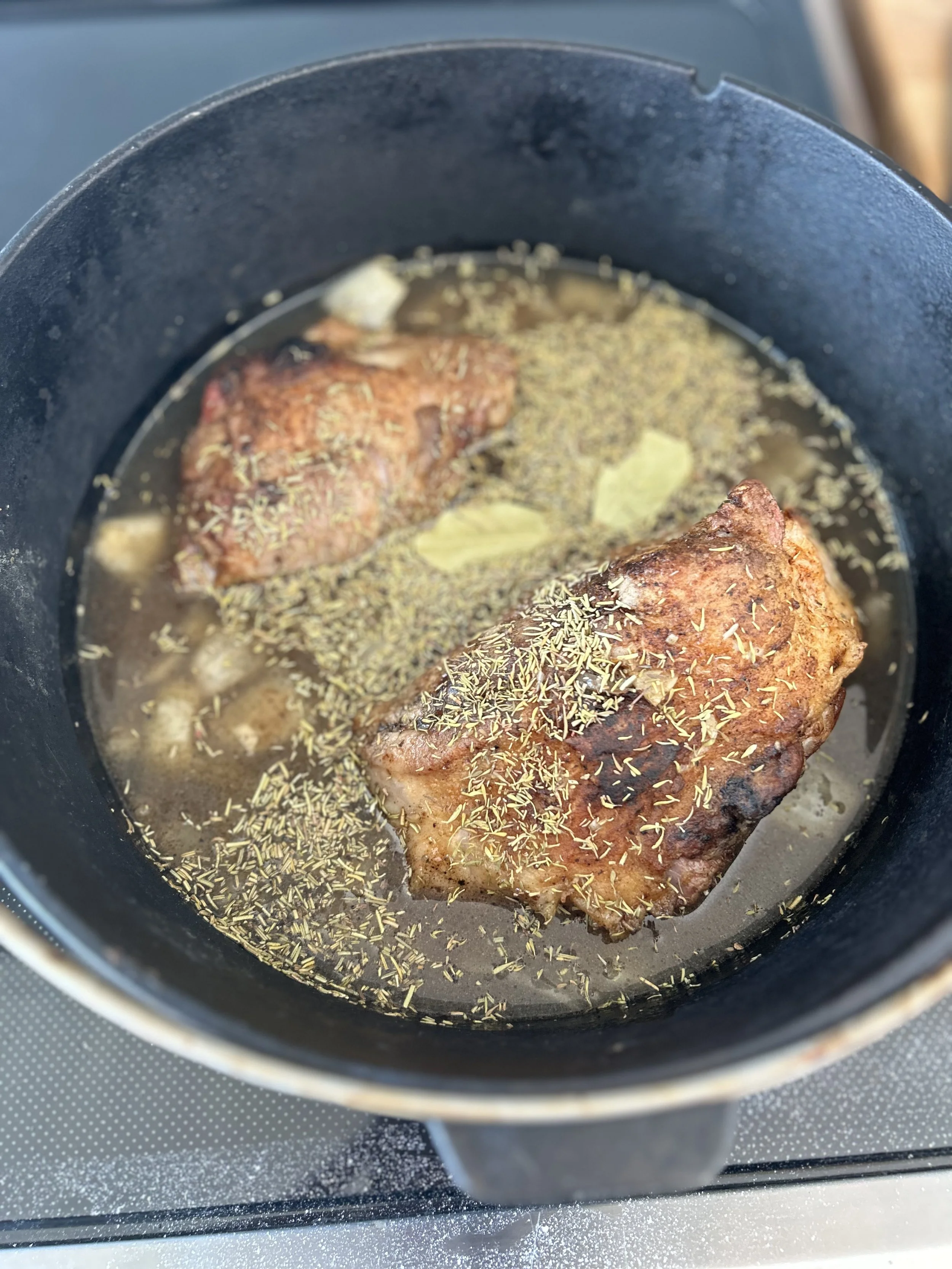
Add vegetable mixture to the pot holding the hocks. Add broth to cover about half-way up the hocks and the rosemary, thyme and bay leaves. Place pot with all ingredients on a burner on the stove. Allow to come to a boil and then reduce the temperature so the liquid is barely simmering.
Step 5:
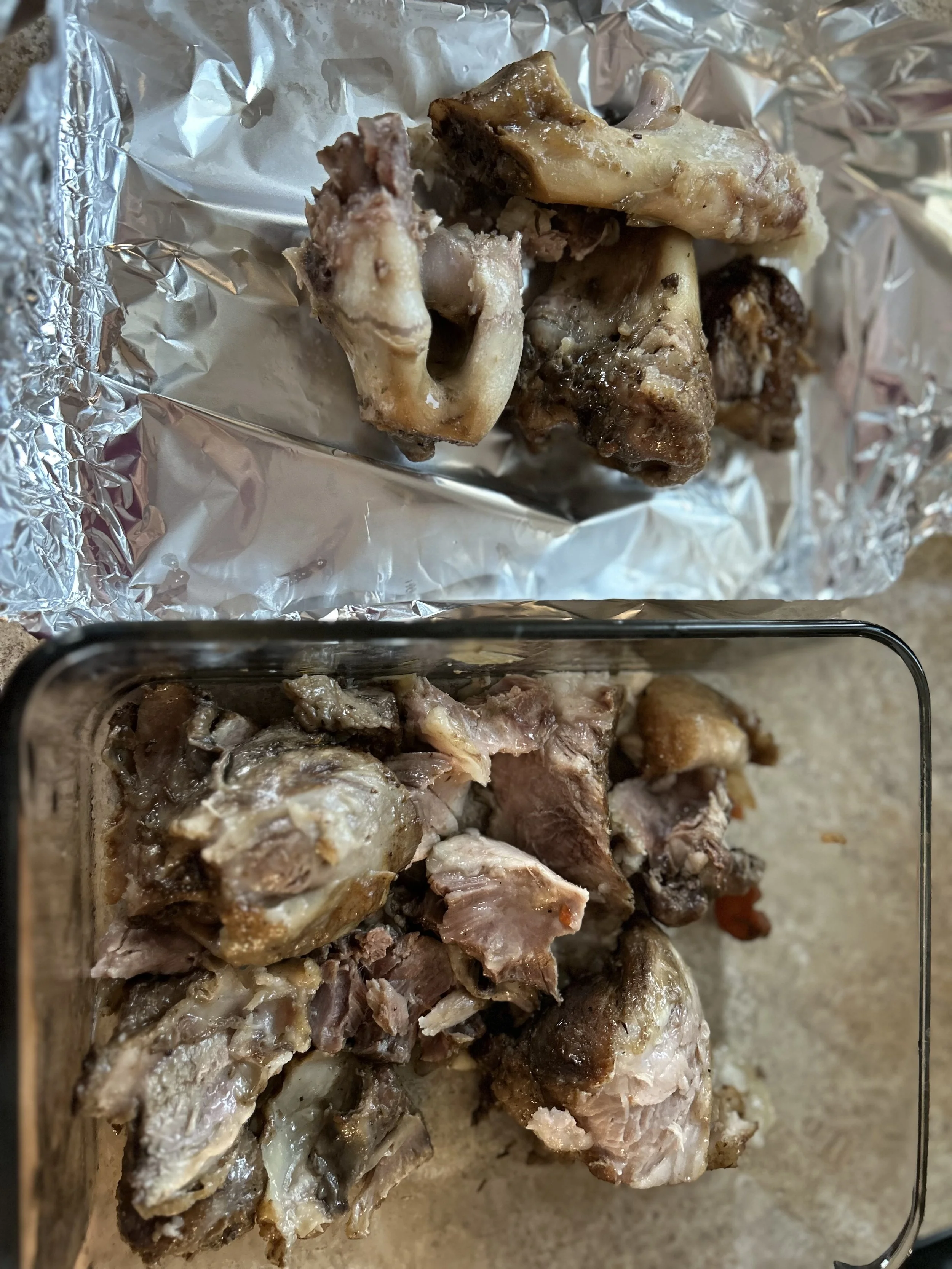
Allow to simmer until meat is fork tender and falls away from the bone easily (about 3 hours). Remove hocks from the liquid and pull meat from the bones. Cover and keep warm while making the gravy. Discard bones.
Step 6: (Optional)
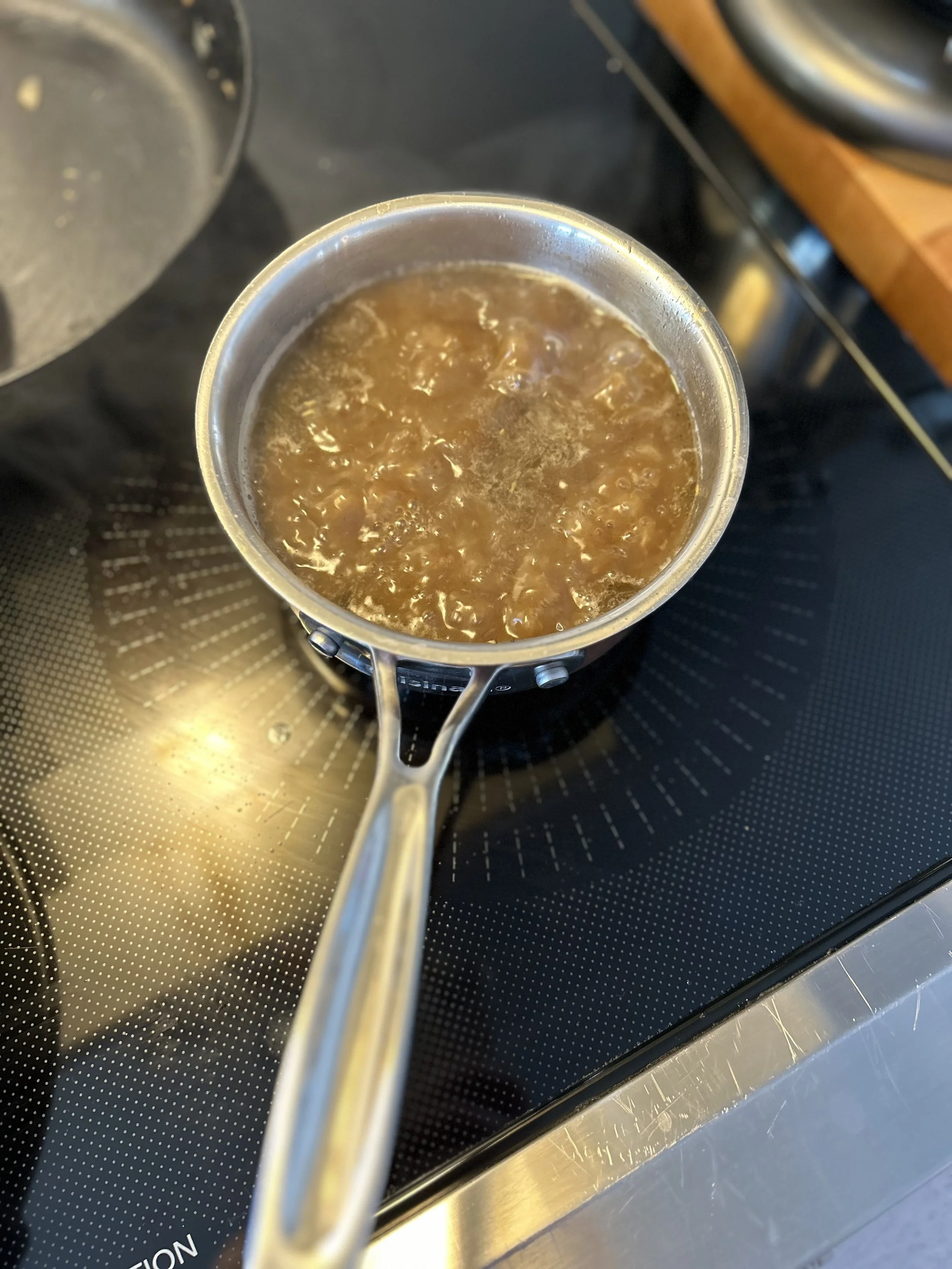
Strain the liquid in the cooking pot and discard solids. Return liquids to the pan (or smaller pot) and boil until reduced to a consistency you would like. A cornstarch and water could be used to thicken alternately as well.